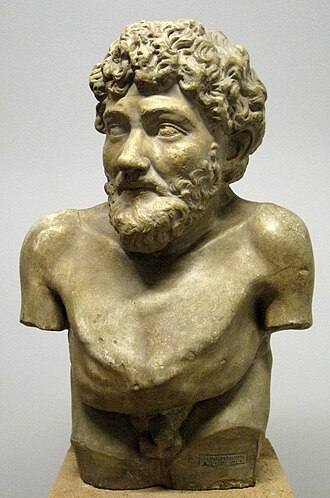
Fun Facts About Aesop
- Aesop's fables were known to Socrates, who turned some of them into verse while in prison, yet it is far from certain that a historical Aesop ever existed.[1][3][4]
- According to Plutarch, Aesop was sentenced to death at Delphi on a trumped-up charge of temple theft and thrown from a cliff, though the scholar Ben Edwin Perry dismissed the story as legend.[1]
- In the largely fictional ancient biography The Aesop Romance, Aesop is an extremely ugly slave who cannot speak until the goddess Isis grants him speech and a gift for clever storytelling.[1]
- Louis XIV's palace of Versailles had a hedge maze with 39 fountains showing Aesop's fables; it was demolished in 1778, but its statue of Aesop survives.[1][5][6]
- Diego Velázquez painted a portrait of Aesop dated 1639–40, which now hangs in the Museo del Prado.[1][7][8]
- In Lucian's 2nd-century satire A True Story, the narrator reaches the Island of the Blessed and finds Aesop serving there as the jester.[1]
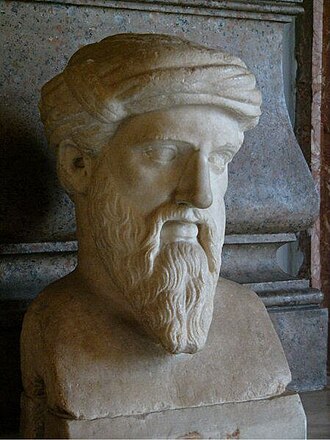
- Aesop was alive at the same time as Pythagoras — their lives overlapped for about 6 years (c. 570 BCE–c. 564 BCE).[1][2][9][10]
Aesop was a Greek fabulist and storyteller credited with a number of fables now collectively known as Aesop's Fables. Although his existence remains unclear and no writings by him survive, numerous tales credited to him were gathered across the centuries and in many languages in a storytelling tradition that continues to this day. Many of the tales associated with him are characterized by anthropomorphic animal characters.[1]
Read more on Wikipedia →Contemporaries
Questions About Aesop
When was Aesop born?
Aesop was born about 620 BCE and died about 564 BCE. The exact dates are not known.
What was Aesop known for?
Aesop was known for: Ancient Greek storyteller credited with Aesop's Fables. Aesop was a Greek fabulist and storyteller credited with a number of fables now collectively known as Aesop's Fables. Although his existence remains unclear and no writings by him survive, numerous tales credited to him were gathered across the centuries and in many languages in a storytelling tradition that continues to this day. Many of the tales associated with him are characterized by anthropomorphic animal characters.
Who was alive at the same time as Aesop?
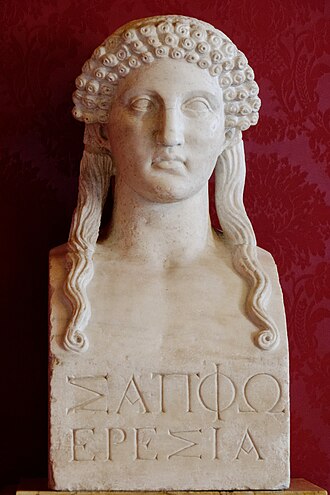
Aesop's closest contemporary was Sappho. Their lives overlapped for 50 years.
Sources
- Aesop — Wikipedia. Text available under CC BY-SA 4.0
- Aesop (Q43423) — Wikidata
- Socrates — Wikipedia
- Socrates (Q913) — Wikidata
- Louis XIV — Wikipedia
- Louis XIV (Q7742) — Wikidata
- Diego Velázquez — Wikipedia
- Diego Velázquez (Q297) — Wikidata
- Pythagoras — Wikipedia
- Pythagoras (Q10261) — Wikidata
- Portrait: Aesop pushkin01.jpg — Wikimedia Commons. user:shakko, CC BY-SA 3.0