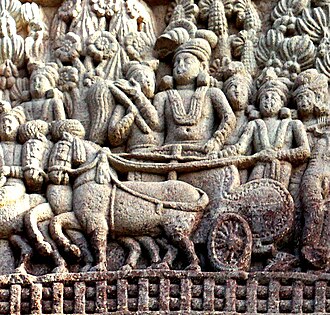
Fun Facts About Ashoka
- Ashoka's symbols are on modern India's emblem and flag: the State Emblem adapts his Lion Capital, and the wheel at the center of the national flag is the Ashoka Chakra.[1]
- Ashoka had been almost forgotten as a historical emperor, because the Brahmi script of his edicts remained undeciphered until James Prinsep studied it in the 19th century.[1]
- The name Ashoka literally means "without sorrow"; according to a legend, his mother chose it because his birth removed her sorrows.[1]
- One of Ashoka's edicts limited the imperial kitchen to killing two peacocks and a deer a day, and promised that in future even these would be spared.[1]
- Ashoka's edicts provided medical facilities for both humans and animals, and called for banyan trees, mango groves, rest houses and wells every 800 meters along the roads.[1]
- According to Buddhist legend, Ashoka's jealous empress mistook "Bodhi" for a mistress and used black magic to make the sacred Bodhi Tree wither.[1]
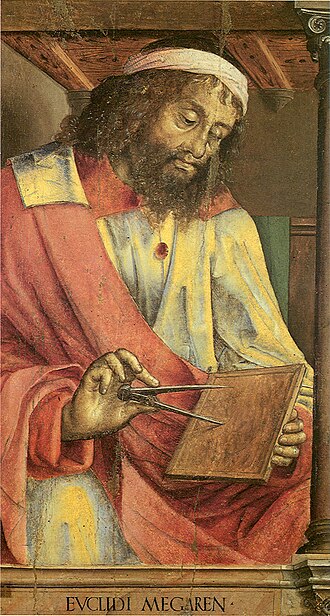
- Ashoka was alive at the same time as Euclid — their lives overlapped for about 39 years (304 BCE–c. 265 BCE).[1][2][3][4]
- Ashoka lived to about 72, from 304 BCE until 232 BCE.[1][2]
Ashoka, also known as Asoka or Aśoka, most commonly known as Ashoka the Great, was Emperor of Magadha from c. 268 BCE until his death, and the third ruler of the Maurya Empire. His empire covered a large part of the Indian subcontinent, stretching from present-day Afghanistan in the west to present-day Bangladesh in the east, with its capital at Pataliputra. A patron of Buddhism, he is credited with an important role in the spread of Buddhism across ancient Asia.[1]
Read more on Wikipedia →Contemporaries
Questions About Ashoka
When was Ashoka born?
Ashoka was born in 304 BCE and died in 232 BCE.
How old was Ashoka at death?
Ashoka died in 232 BCE at about 72 years old (304 BCE–232 BCE).
What was Ashoka known for?
Ashoka was known for: Mauryan emperor who spread Buddhism. Ashoka, also known as Asoka or Aśoka, most commonly known as Ashoka the Great, was Emperor of Magadha from c. 268 BCE until his death, and the third ruler of the Maurya Empire. His empire covered a large part of the Indian subcontinent, stretching from present-day Afghanistan in the west to present-day Bangladesh in the east, with its capital at Pataliputra. A patron of Buddhism, he is credited with an important role in the spread of Buddhism across ancient Asia.
Who was alive at the same time as Ashoka?
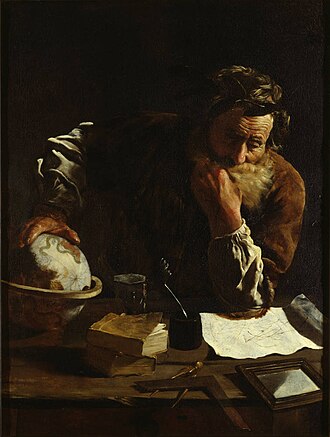
Ashoka's closest contemporary was Archimedes. Their lives overlapped for 55 years.
Sources
- Ashoka — Wikipedia. Text available under CC BY-SA 4.0
- Ashoka (Q8589) — Wikidata
- Euclid — Wikipedia
- Euclid (Q8747) — Wikidata
- Portrait: Ashoka's visit to the Ramagrama stupa Sanchi Stupa 1 Southern gateway.jpg — Wikimedia Commons. Photo Dharma from Sadao, Thailand, CC BY 2.0