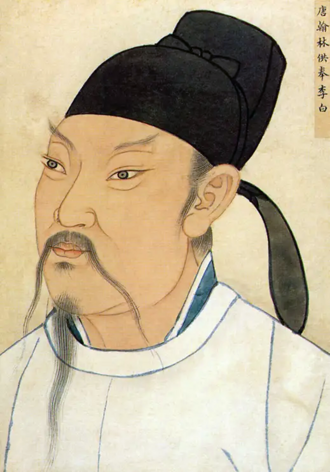
Fun Facts About Li Bai
- Li Bai was sentenced to death after a civil war, but a general he had once saved from court martial offered to trade his own official rank for the poet's life. The sentence became exile.[1]
- According to one legend, Li Bai drowned after falling drunk from his boat while trying to embrace the moon's reflection in the Yangtze River.[1]
- Li Bai may have been born in Suyab in Central Asia, in present-day Kyrgyzstan. Emperor Xuanzong later employed him as a translator because he knew at least one non-Chinese language.[1]
- Li Bai and Du Fu, the two most famous Tang poets, met in person only in 744 and the following year, but kept up their friendship through poetry.[1]
- A story, probably apocryphal, says Li Bai was sent away from court after the powerful eunuch Gao Lishi was asked to help remove his muddy boots in front of the Emperor.[1]
- Gustav Mahler set German adaptations of four Li Bai poems in his 1908 song-symphony Das Lied von der Erde.[1]
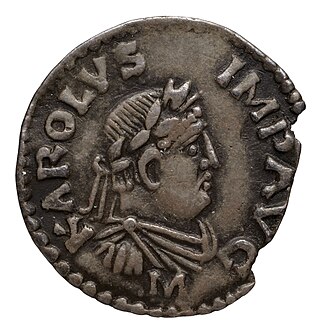
- Li Bai was alive at the same time as Charlemagne — their lives overlapped for 14 years (748–762).[1][2][3][4]
- Li Bai lived to about 61, from 701 until 762.[1][2]
Li Bai, also known by his courtesy name of Taibai, was a Chinese poet acclaimed as one of the best and most important poets of the Tang dynasty, and even in the whole of Chinese poetry. He and his friends such as Du Fu (712–770) were among the prominent figures in the flourishing of Chinese poetry of the Tang dynasty, often called the "Golden Age of Chinese Poetry". The expression "Three Wonders" denotes Li Bai's poetry, Pei Min's swordplay, and Zhang Xu's calligraphy.[1]
Read more on Wikipedia →Contemporaries

Questions About Li Bai
When was Li Bai born?
Li Bai was born in 701 and died in 762.
How old was Li Bai at death?
Li Bai died in 762 at about 61 years old (701–762).
What was Li Bai known for?
Li Bai was known for: Chinese poet of the Tang dynasty. Li Bai, also known by his courtesy name of Taibai, was a Chinese poet acclaimed as one of the best and most important poets of the Tang dynasty, and even in the whole of Chinese poetry. He and his friends such as Du Fu (712–770) were among the prominent figures in the flourishing of Chinese poetry of the Tang dynasty, often called the "Golden Age of Chinese Poetry". The expression "Three Wonders" denotes Li Bai's poetry, Pei Min's swordplay, and Zhang Xu's calligraphy.
Who was alive at the same time as Li Bai?
Li Bai's closest contemporary was Adi Shankara. Their lives overlapped for 49 years.
Sources
- Li Bai — Wikipedia. Text available under CC BY-SA 4.0
- Li Bai (Q7071) — Wikidata
- Charlemagne — Wikipedia
- Charlemagne (Q3044) — Wikidata
- Portrait: 李白.png — Wikimedia Commons. Unknown source, Public domain