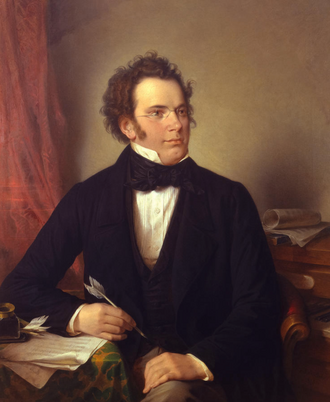
Fun Facts About Franz Schubert
- Franz Schubert gave only one public concert of his own works in his whole career, held on March 26, 1828, the anniversary of Beethoven's death.[1][3][4]
- Schubert was only 5 feet tall, and his friends nicknamed him "Schwammerl," which translates roughly as "Tubby" or "Little Mushroom."[1]
- Schubert, who admired Beethoven all his life, was a torchbearer at Beethoven's funeral and asked to be buried near his grave.[1][3][4]
- When the graves of Schubert and Beethoven were moved in 1888, composer Anton Bruckner reached into both coffins and held their skulls in his hands.[1][3][4]
- In 1815 alone Schubert wrote over 20,000 bars of music, including a symphony, nine church works, and about 140 songs.[1]
- Franz Liszt helped spread Schubert's music after his death and called him "the most poetic musician who ever lived."[1][5][6]
- Franz Schubert was alive at the same time as George Washington — their lives overlapped for 2 years (1797–1799).[1][2][7][8]
- Franz Schubert shares a birthday with Tokugawa Ieyasu: both were born on January 31.[1][2][9][10]
Franz Peter Schubert was an Austrian composer of the late Classical and early Romantic eras. He was immensely prolific despite living a short life, leaving behind a vast oeuvre of more than 1,000 compositions, including over 600 Lieder and other vocal works, seven complete symphonies, sacred music, operas, incidental music, and a large body of piano and chamber music. Among these are the songs "Gretchen am Spinnrade", "Erlkönig" and "Ave Maria"; the Trout Quintet; the Symphony in B minor, "Unfinished"; the Symphony in C major, "The Great"; the String Quartet No. 14 in D minor ; the String Quintet in C major; the Impromptus for solo piano; the last three piano sonatas; the Fantasia in F minor for piano four hands; the incidental music to the play Rosamunde; the song cycles Die schöne Müllerin and Winterreise; and the song collection Schwanengesang.[1]
Read more on Wikipedia →Contemporaries
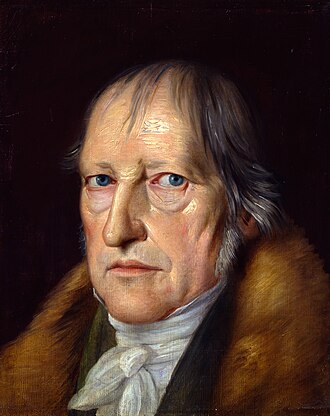
Their World
Questions About Franz Schubert
When was Franz Schubert born?
Franz Schubert was born on January 31, 1797, and died on November 19, 1828.
How old was Franz Schubert at death?
Franz Schubert was born on January 31, 1797, and died on November 19, 1828, at age 31.
What was Franz Schubert known for?
Franz Schubert was known for: Composer of lieder and the Unfinished Symphony. Franz Peter Schubert was an Austrian composer of the late Classical and early Romantic eras. He was immensely prolific despite living a short life, leaving behind a vast oeuvre of more than 1,000 compositions, including over 600 Lieder and other vocal works, seven complete symphonies, sacred music, operas, incidental music, and a large body of piano and chamber music. Among these are the songs "Gretchen am Spinnrade", "Erlkönig" and "Ave Maria"; the Trout Quintet; the Symphony in B minor, "Unfinished"; the Symphony in C major, "The Great"; the String Quartet No. 14 in D minor ; the String Quintet in C major; the Impromptus for solo piano; the last three piano sonatas; the Fantasia in F minor for piano four hands; the incidental music to the play Rosamunde; the song cycles Die schöne Müllerin and Winterreise; and the song collection Schwanengesang.
Who was alive at the same time as Franz Schubert?
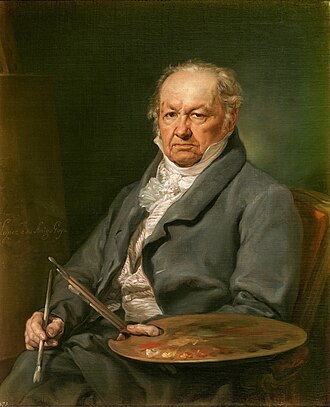
Franz Schubert's closest contemporary was Francisco Goya. Their lives overlapped for 31 years.
Sources
- Franz Schubert — Wikipedia. Text available under CC BY-SA 4.0
- Franz Schubert (Q7312) — Wikidata
- Ludwig van Beethoven — Wikipedia
- Ludwig van Beethoven (Q255) — Wikidata
- Franz Liszt — Wikipedia
- Franz Liszt (Q41309) — Wikidata
- George Washington — Wikipedia
- George Washington (Q23) — Wikidata
- Tokugawa Ieyasu — Wikipedia
- Tokugawa Ieyasu (Q171977) — Wikidata
- Portrait: Franz Schubert by Wilhelm August Rieder 1875 larger version.png — Wikimedia Commons. Wilhelm August Rieder, Public domain